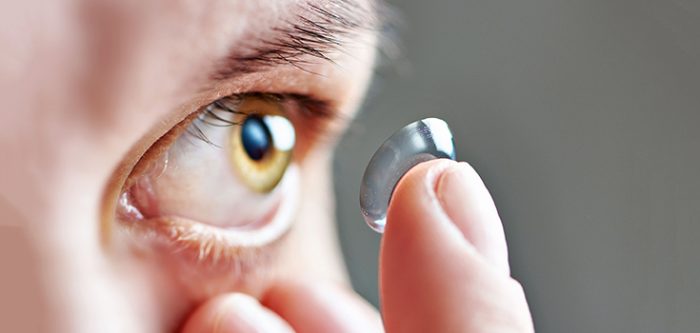
Even though they are great for your eyes, all contact lenses aren’t equal. Although your doctor will help you select the best pair for your eyes, you should always know a little bit about the contacts that are available to choose from. All contact lenses can be separated depending on their wearing schedule, purpose, material, and over transparency.
Materials
Contacts can be separated or best determined by their material. Contacts are divided into two main groups - soft and rigid (hard). Soft lenses are gas permeable to a certain extent, being further categorized by the amount of water they contain. Soft contacts can have either a low, which is less than 50 percent moisture, or a high moisture content, which is more than 50 percent. Rigid or hard contacts on the other hand, are much harder in material and are considered to be gas permeable.
Wearing schedules
Hard contact lenses can last for months, possibly even years before they need to be replaced. Soft contacts on the other hand, have a schedule for replacement. Some may need to be removed every 2 weeks, monthly, or even daily. The more advanced contact lenses, such as Night and Day contacts, will allow you to wear them all day and all night. Just like other contacts however, you will still need to clean them on a regular basis to ensure that the protein is removed.
Contact lens designs
The designs for contacts are divided into three areas - toric, spherical, and multi-focal. Toric lenses are for those who have astigmatism, spherical is for short sightedness, and the correction of long sightedness, and multi-focal contact lenses are used in the correction of presbyopia. All three designs have their distinct purpose, and you should always ask your optician before you rush out and buy one.
Many different purposes
As you may already know, contact lenses serve different purposes as well. They can be optical, therapeutic, cosmetic or decorative. Optical are the most common, as they are for the correction of vision and anomalies you have may have. Therapeutic lenses are normally soft contacts that serve to protect your cornea. They are also used as a reservoir for certain medicines that are used to treat various cornea diseases and malfunctions.
Decorative contact lenses are basically color contacts that produce various effects, such as rainbow colors, cat’s eyes, and so on. Cosmetic on the other hand, are meant to change the overall appearance of your eyes. Most types of cosmetic contact lenses are designed to enhance your overall eye color.
The type for you
With there being several different types of contacts available on the market, you should consult with your optician to find out which are the best for you. If you don’t have astigmatism, you certainly wouldn’t want to get toric lenses. If you don’t know anything about contact lenses, you may end up doing your eyes more harm than good. Contact lenses are designed to correct your vision and often times protect your eyes, which is why you want to choose them carefully.
If you pick your contact lenses carefully, you’ll get the best type for your eyes. Your optician will give you his recommendations during your fitting exam, and go over how you should care for your new contacts. This way, even if you are new to the world of contacts, you’ll know what you should and shouldn’t do. With the right type of contacts for your eyes - you’ll find vision to be a new and exciting world.


 Topic: Types Of Contact Lenses (Read 15085 times)
 Similar topics (1)

 October 06, 2017, 01:01:39 AM