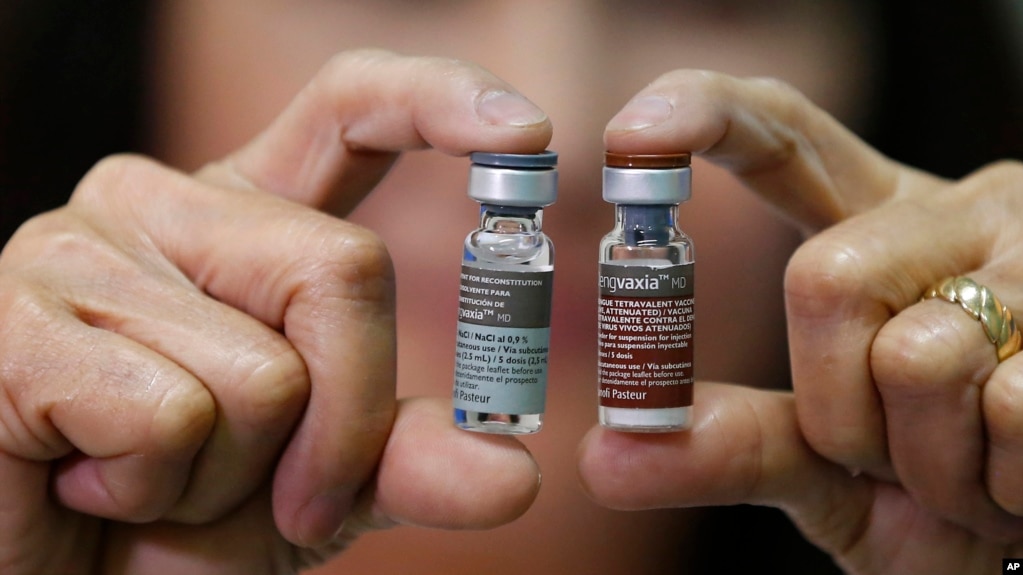
The World Health Organization says the first-ever vaccine for dengue needs to be dealt with in "a much safer way," meaning that the shot should mostly be given to people who have previously been infected with the disease.
In November, the vaccine's manufacturer, Sanofi Pasteur, said people who had never been sickened by dengue before were at risk of developing a more serious disease after getting the shot.
After a two-day meeting this week, WHO's independent vaccines group said it now had proof the vaccine should only be used "exclusively or almost exclusively in people who have already been infected with dengue."
The U.N. health agency said a test should be developed so doctors would be able to quickly tell if people had previously been sickened by dengue - but the group acknowledged doing that so isn't straightforward.
"We see significant obstacles in using the vaccine this way, but we are confident this also spurs the development of a rapid diagnostic test," said Dr. Joachim Hombach, executive secretary of WHO's expert group, during a news conference Thursday.
Sanofi said last year that doctors should consider whether people might have been previously infected with dengue before deciding whether they should risk getting immunized. The company said it expected to take a 100 million euro ($118 million) loss based on that news.
People who catch dengue more than once can be at risk of a hemorrhagic version of the disease. The mosquito-spread virus is found in tropical and sub-tropical climates across Latin and South America, Asia, Africa and elsewhere. It causes a flu-like disease that can cause joint pain, nausea, vomiting and a rash. In severe cases, dengue can result in breathing problems, hemorrhaging and organ failure.
About half the world's population is at risk of dengue; WHO estimates that about 96 million people are sickened by the viral infection every year.
Following Sanofi's announcement last year, the Philippines halted its dengue immunization program, the world's first national vaccination program for dengue. The government also demanded a refund of more than 3 billion pesos ($59 million) from Sanofi and is considering further legal action.
In February, the Philippines said the vaccine was potentially linked to the deaths of three people: all of them died of dengue despite having received the vaccine.
The country imposed a symbolic fine of $2,000 on Sanofi and suspended the vaccine's approval, charging that the drugmaker broke rules on how the shot was registered and marketed.
More than 730,000 children aged 9 and above in the Philippines have received at least one dose of the dengue vaccine, usually delivered in three doses.
There is no specific treatment for dengue and there are no other licensed vaccines on the market.


