At a glance
Expert's Rating
Pros
- Brilliant performance for the price
- Impressive battery life and charging
- Great display
Cons
- Fussy software with bloatware
- Weak ultrawide camera
Our Verdict
The X8 Pro offers plenty of power for the money, reinforcing Poco’s position as a great choice for those on a budget who want the power to play the latest games. There are compromises in the daily software experience and cameras, but as a performance-focused phone it’s hard to fault.
Price When Reviewed
This value will show the geolocated pricing text for product undefined
Best Pricing Today
Price When Reviewed
339,90 Euro
Best Prices Today: Xiaomi Poco X8 Pro
Poco’s aim is to offer high-performance phones to younger buyers with tighter budgets, with a consistent goal of delivering a great gaming experience. That often leads to phones that are almost laughably cheap – but not in a bad way.
The Poco X8 Pro is the follow-up to 2025’s Poco X7 Pro and sits alongside the Poco X8 Pro Max, which sits in a new, slightly higher position, costing a little more and bumping some of the specs. For those who don’t know, Poco is a sub-brand of Xiaomi, sitting alongside Redmi, so much of the experience is close to Xiaomi phones.
I used the Poco X8 Pro as my main phone for a couple of weeks to see just how it performs, what you get for the money and where it makes compromises compared to pricier handsets.
Design & Build
- Aluminium frame
- Glass back
- IP68 protection
You’d be forgiven for thinking that the Poco X8 Pro has lost something of its character, ditching the two-tone finish of the Poco X7 Pro and leaving buyers with a rather underwhelming choice of black, white and mint green.
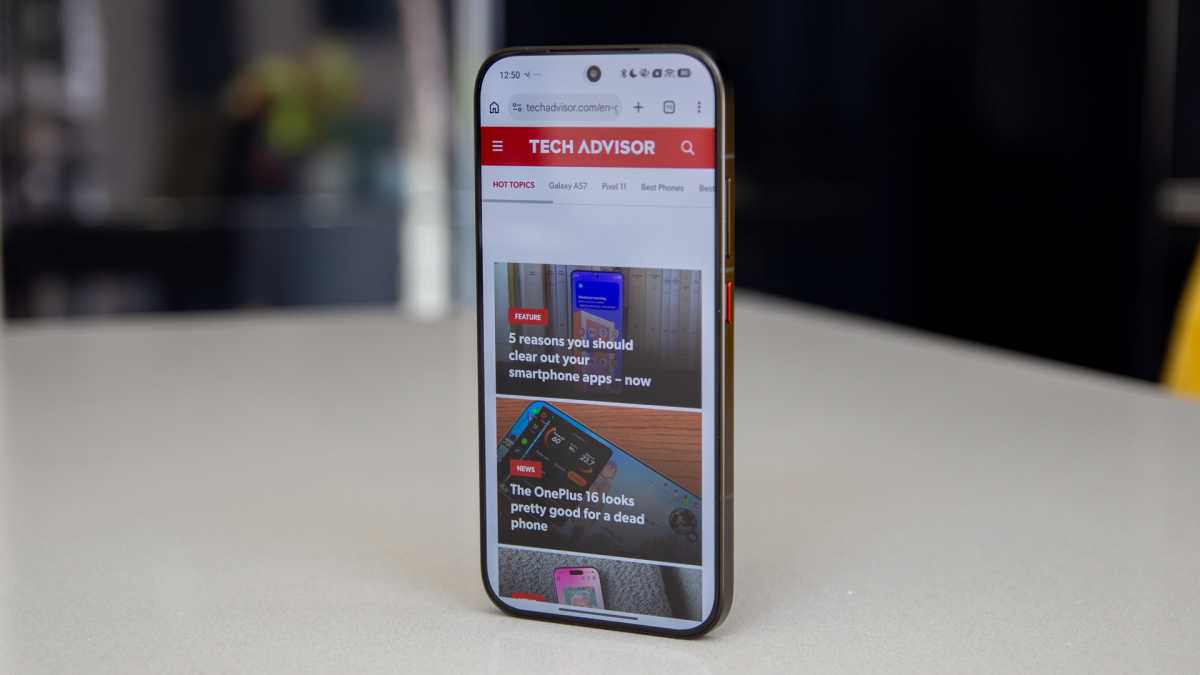
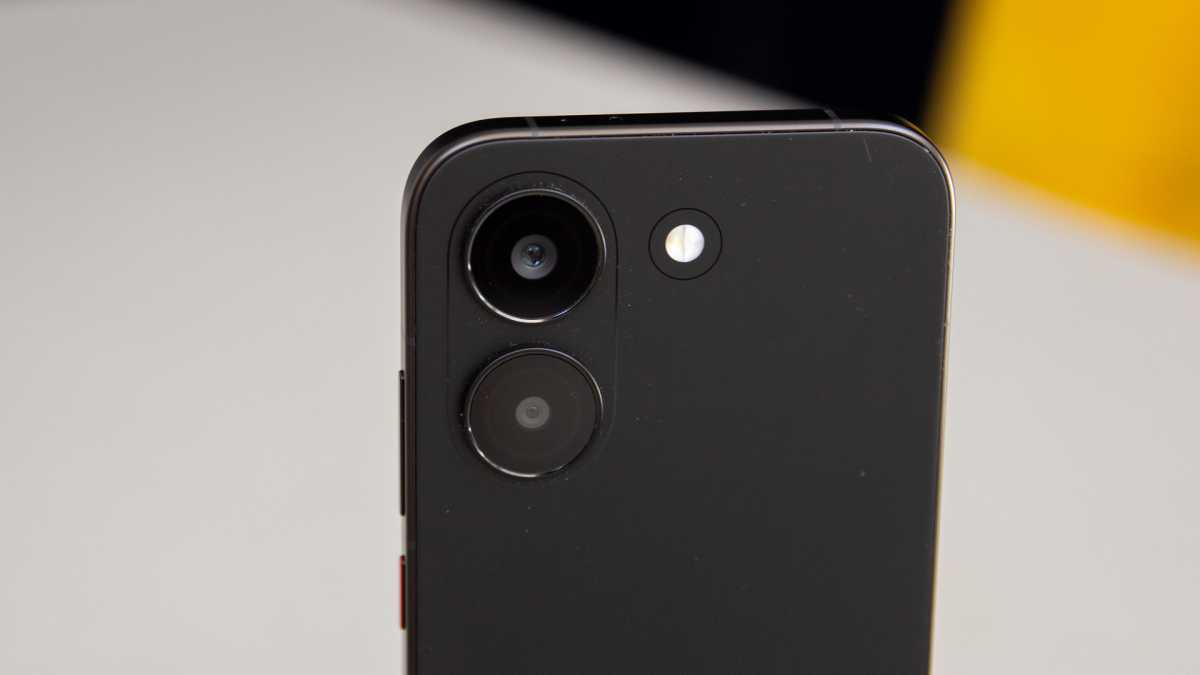
That two-tone finish was plastic, however, and some may prefer the understated seriousness of the X8 Pro’s design. Not much changes from previous handsets: there’s still a dual camera on the back, the LED flash now changes to a round design rather than oblong, but that’s about the sum of the visual differences.
Chris Hall / Foundry
It retains a flat aluminium frame, with a signature red chamfer cut into the power button on the side, but it’s otherwise rather plain. The display sits flat too, perhaps a nod to its intended target market of gamers, and preferable to curved display edges for those wanting to maximise touchable screen space.
There’s an IP68 rating – not bad for a £299 phone – but it doesn’t extend to the IP69K rating that many devices are starting to offer. Not that it matters: IP68 survives submersion, while IP69K resists high-pressure hot water jets, begging the question of what you’re actually doing with your phone.
The black version of the Poco X8 Pro that I tested is inoffensive in its design, but not wildly exciting either. With a weight of 201g and thickness of 8.38mm, it’s right around average for a modern smartphone.
Screen & Speakers
- 6.59-inch AMOLED display, 120Hz
- 2756 x 1268 pixel resolution
- 3500 nits peak brightness
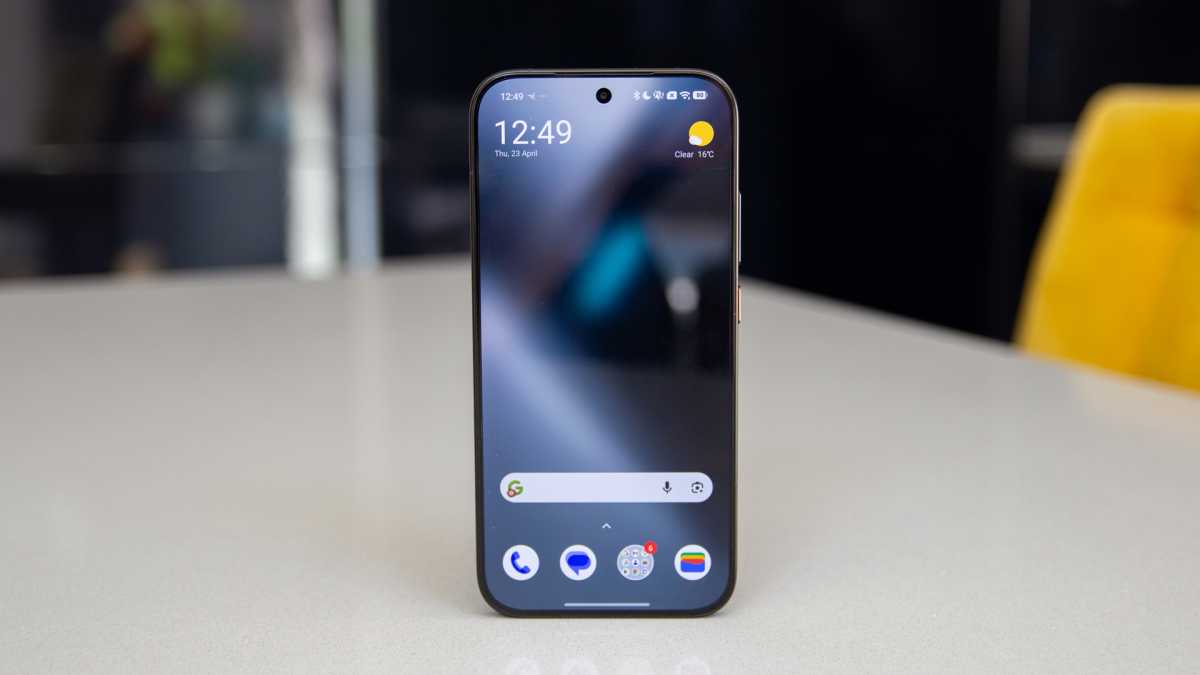
With the Poco X8 Pro Max expanding to 6.83 inches, the Poco X8 Pro is a little smaller than the X7 Pro. That’s the only real change here, with the X8 Pro keeping the high resolution and refresh rate, while the peak brightness creeps a little higher than the previous iteration, at 3500 nits.
As I said in the design section, it’s a flat display, ideal for gamers, along with that 120Hz refresh rate and fast touch sampling rates.
I found the display to be plenty bright, with nice vibrant colours, with options in the menu to tweak it to your preference. While those peak brightnesses are reserved for HDR content, I found the daily brightness to be good – so no complaints there.
Chris Hall / Foundry
There’s a factory-fitted screen protector, just like most phones these days. I found this picked up a couple of marks during my testing, which I doubt would have scratched the screen, so it’s perhaps a little softer than I’d like it to be. The display itself is Gorilla Glass 7i, which is typical of mid-range phones.
The speakers on the Poco X8 Pro are good, with the ear speaker handling most of the highs and the speaker on the base of the phone contributing to the bass and much of the mid-range drive.
I found calls to be clear, with no complaints from those on the other end of the line either.
- MediaTek Dimensity 8500 Ultra
- 8 or 12GB RAM
- 256 or 512GB storage
Poco has established much of its reputation on offering phones with powerful hardware at prices that rivals struggle to meet. That’s the case for the X8 Pro, following the trend of other Poco models. Here, the Dimensity 8500 Ultra sits at the heart of this phone.
In terms of power for the price – and power against more mainstream competition – the Poco X8 Pro outdoes itself
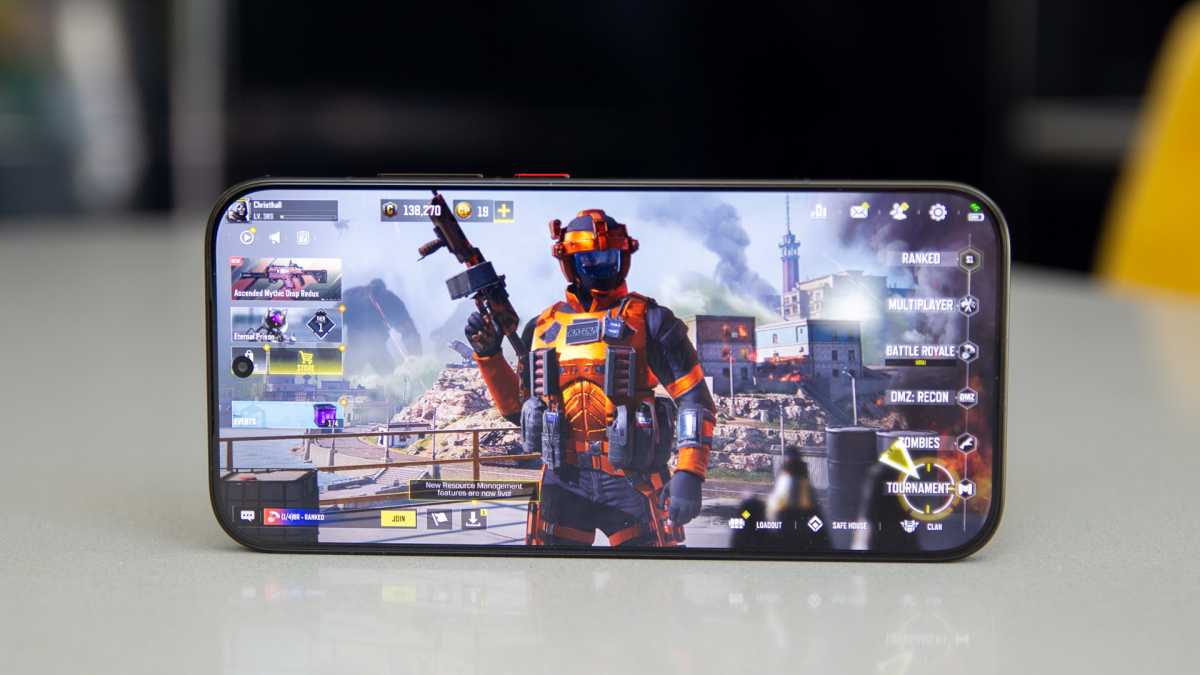
That puts it in the sub-flagship phone category while being priced as a mid-range device. That’s a great starting point for this device, which runs nicely and smoothly. It also kept its composure during long sessions playing Call of Duty: Mobile, avoiding any noticeable overheating.
Chris Hall / Foundry
I was testing the version with 12GB RAM, which is paired with 512GB storage, but there’s also the option for 8GB, with either 256GB or 512GB storage.
This model has slightly lower-tier hardware than the X8 Pro Max, so benchmarks show that the larger phone is a slightly better performer, although in daily use, both are silky smooth in operation.
In terms of power for the price – and power against more mainstream competition – the Poco X8 Pro outdoes itself. It’s a flagship experience.
Cameras
- 50Mp f/1.5 main, 1/1.95in sensor
- 8Mp f/2.2 ultrawide
- 20Mp f/2.2 front camera
One of the areas where Poco makes sacrifices to hit the attractive price point is in the camera: the X8 Pro comes with two cameras on the back. I’m glad no junk sensors are bulking the camera up to look like it’s a flagship camera, instead offering a decent main camera and an ultrawide that’sjust about ok.
The main camera is what the X8 Pro is all about, using a Sony IMX882 sensor, which is designed for mid-range phones, though it’s the same lens as the X7 Pro and X8 Pro Max. It’s reasonable, but not going to win any prizes for its performance.
Chris Hall / Foundry
In good light you’ll get nice balanced shots, but it can overexpose in brighter conditions, losing a grip on colour accuracy. The shallow depth of field that comes from that f/1.5 aperture means that getting too close to the subject results in much of it being blurred – there’s no accounting for macro focus, here, so you’ll either have to step back or use the 2x sensor cropping zoom.
The low light performance – in part thanks to that aperture – is solid. It won’t compete with the Pixel 10a or other top low-light handsets. But it will get the shot, albeit with noise quickly creeping into shadows, even in daylight indoor conditions.
There’s no telephoto lens; instead there’s sensor cropping out to 10x, but the results aren’t that great. If you care about zoom photography, don’t buy the Poco X8 Pro.
The ultrawide lens blurs towards the edges and has a slightly richer colour tone than the main camera, which is likely a result of tuning to make it look better. I found it producing bluer skies and greener grass, as though someone had tweaked the saturation dial. It’s fixed focus, so anything too close to the lens will be blurred.
If you care about zoom photography, don’t buy the Poco X8 Pro
The selfie camera is fine, but it’s fixed focus again, while the portrait edge detection isn’t as sophisticated as more expensive cameras. It’s possible to adjust the effect at the time of capture, but the results aren’t always great, as seen below. In lower light, it’s much less effective, softening and blurring even in indoor photos.
Video capture comes in at up to 4K 60fps, while the front camera will give you 1080p at 60fps. It’s decent, but nothing to write home about.
Battery Life & Charging
- 6500mAh battery
- 100W charging
- 27W reverse charging
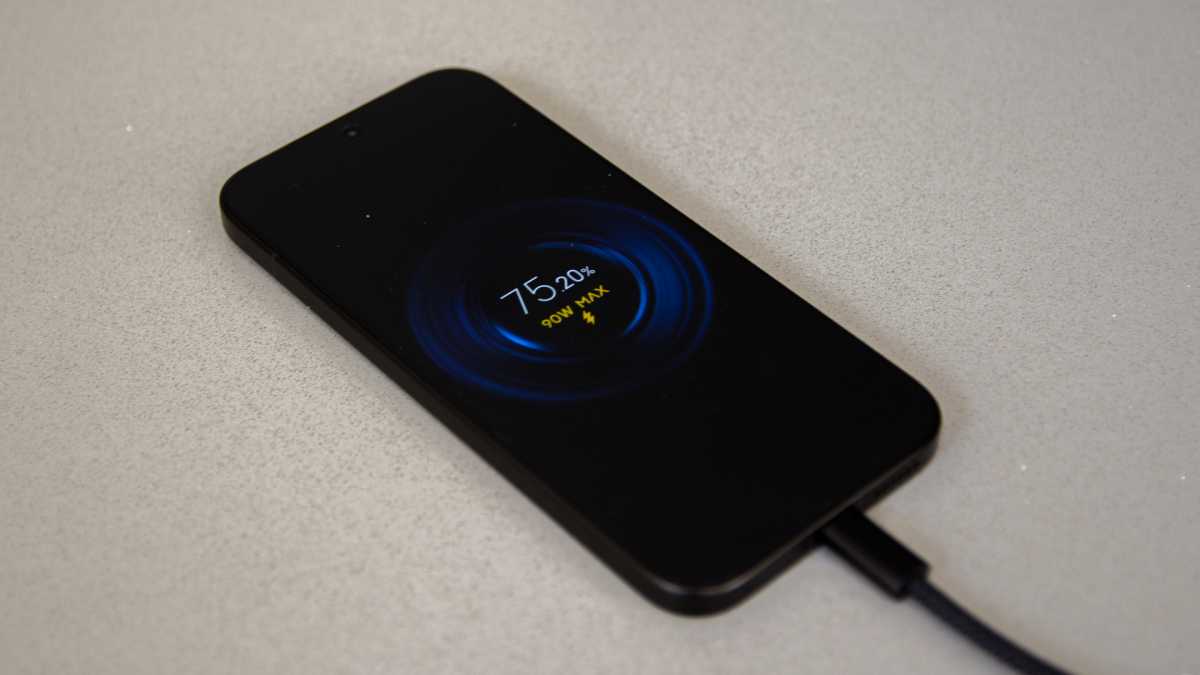
In line with offering the core functions that people really need in a phone, Poco has equipped the X8 Pro with an impressive 6500mAh battery and 100W charging. That’s a very impressive capacity, especially when compared to big hitters such as Google and Samsung.
That plays out in the performance too – battery life is undoubtedly one of the Poco X8 Pro’s key strengths. I’m used to charging my phone every night, but I often didn’t need to while testing it, as there was still plenty in the tank.
Chris Hall / Foundry
Then there’s the incredible advantage of support for 100W wired charging – plug it in when you’re running low, and you’ll be right back to the high percentages in no time at all. I found that in 30 minutes of charging from flat, I got to 80%.
It’s worth noting that you don’t get top charging speeds from the off – you’ll be asked if you want Boost charging to hit the fastest speeds. This is to preserve battery health, as using the fastest charging will decay the battery faster than more measured charging speeds.
battery life is undoubtedly one of the Poco X8 Pro’s key strengths
The X8 Pro is generous with its battery, too, supporting up to 27W reverse charging, meaning you can top up all manner of devices in a pinch. There’s no wireless charging, however.
Software & Apps
- Android 16
- HyperOS 3
- 4 major OS updates, 6 years of security updates
Sitting on Android 16, the Poco X8 Pro runs HyperOS 3, the same software you’ll find on Redmi and Xiaomi phones. The experience of that software is comparable, with the same general strengths and weaknesses.
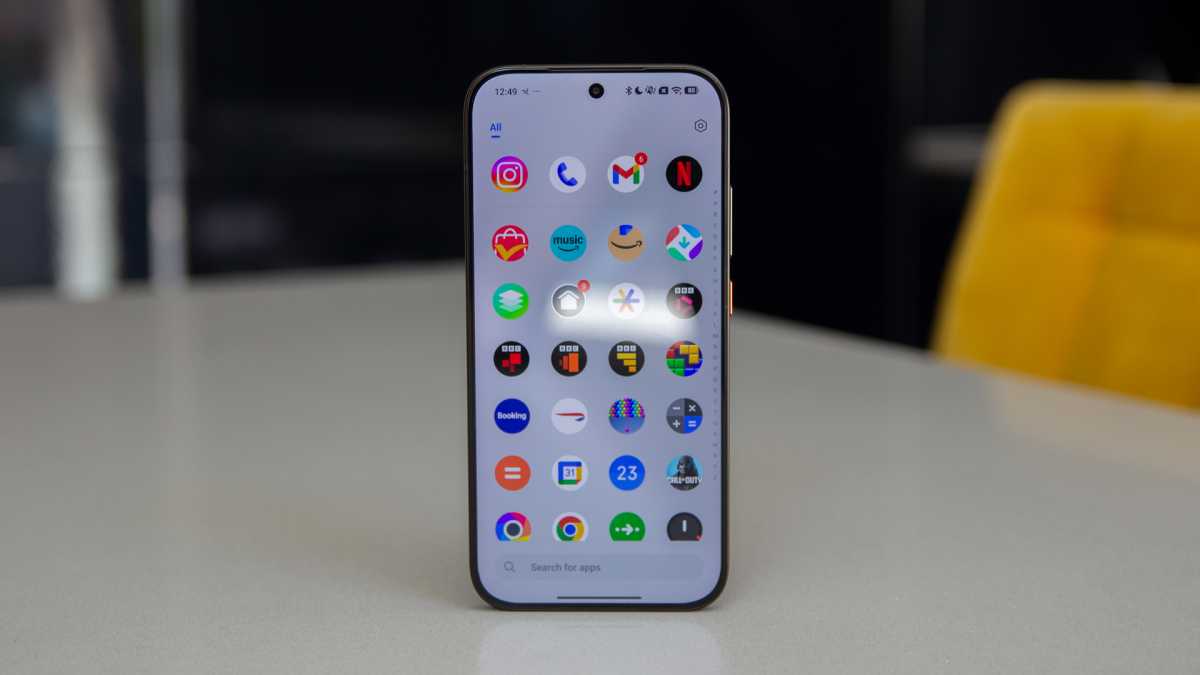
However, there’s some scaling here, as Poco pushes bloatware and adverts more aggressively in its version of HyperOS than Xiaomi does, presumably to offset the lower price.
Chris Hall / Foundry
The result is that the Poco X8 Pro lands with software that’s a bit of a challenge, with prompts to install a full run of bloatware apps from the off, that you have to manually untick to avoid. I also found through the setup process that some of those things I unticked were still on the phone.
Much of the bloatware can be uninstalled, and if you’re an experienced Xiaomi user, you probably have an established process for turning off and disabling features to avoid the constant interruptions. Mi Browser, for example, will regularly ping up with a notification about apps, news and other things, even if you’ve never opened Xiaomi’s own browser.
Poco pushes bloatware and adverts more aggressively in its version of HyperOS than Xiaomi does
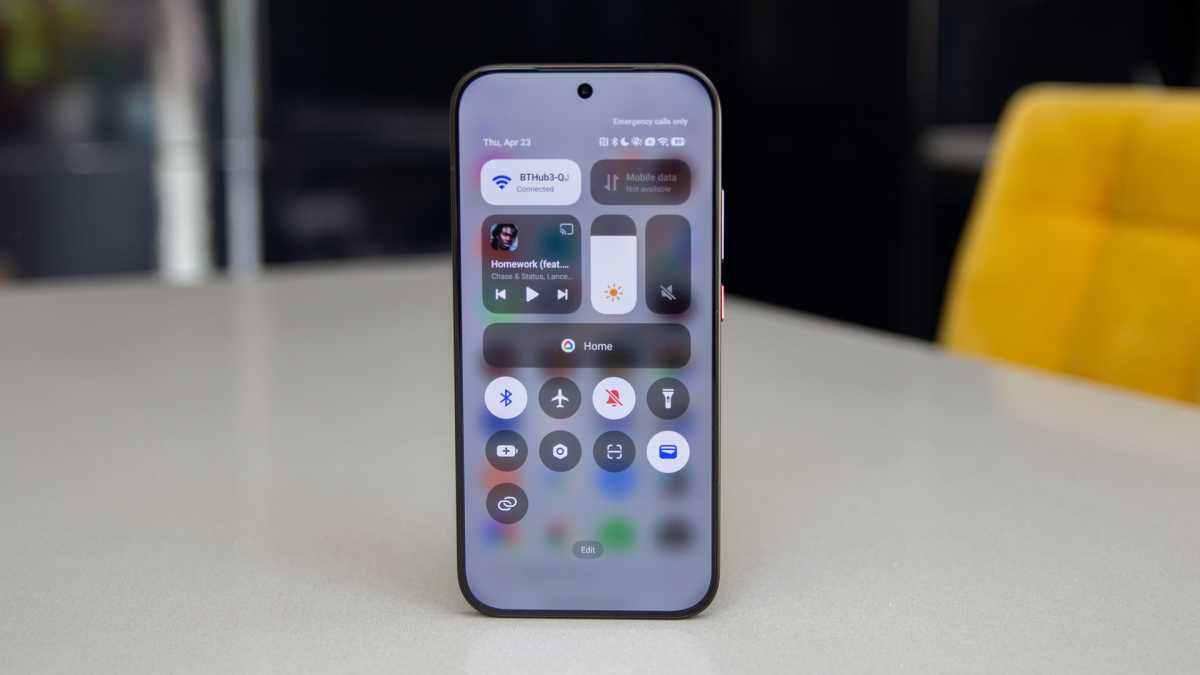
HyperOS is a complete reworking of Android, with many of the convenience features you’d find on a Pixel absent. For example, on Pixel phones, when you receive a two-factor authentication message, there’s a shortcut to copy the code – on Xiaomi, it’s just not there.
Chris Hall / Foundry
The positive side of the equation is that a lot of the changes can be undone and HyperOS can be tamed, because it allows for a lot of customisation. That won’t avoid the duplication – there are multiple galleries, browsers, app stores and so on – but with some work the experience gets smoother.
While the support on this phone isn’t as long as you’ll get from Google or Samsung, it’s not bad for a phone at this price, so it’s hard to be too critical. However, it’s unclear how long we’ll be waiting for Xiaomi’s version of Android 17 to arrive here.
Xiaomi isn’t pushing AI quite as aggressively as rivals such as Motorola, though. I found myself sticking with the built-in Gemini assistant, and it’s easy enough to avoid the offers of AI writing, or translation assistance.
For many people, this phone is a bona fide bargain
Price & Availability
The Poco X8 Pro is officially listed as £349 in the UK for the 8GB with 256GB storage, although it seems to be permanently discounted to £299 or less on the Xiaomi website. It steps up to £329 for the 512GB version with 8GB RAM, before hitting £349 for the 12GB and 512GB storage model at the top of the range.
You can also buy the phone from Amazon UK, where it’s usually available at a similar price.
That’s a good margin cheaper than the Poco X8 Pro Max, which starts at £399 (also currently discounted).
The Poco X8 Pro is available to buy in the UK and Europe, but it’s not available in the US.
It’s hard to compete with Poco on price, with the closest Samsung phone being the Galaxy A27, while the closest Pixel would be the older Pixel 9a at its discounted £325. Our budget and mid-range phone guides have more alternatives.
Should you buy the Poco X8 Pro?
The Poco X8 Pro offers great performance for the price, undercutting mainstream rivals with powerful hardware that’s more common in phones nearly double the price. It features a solid build, a good display and even reasonable software support. For many people, this phone is a bona fide bargain.
The downside comes in the software experience: the HyperOS experience isn’t as smooth as you’ll get from big-name rivals like Samsung and Google, meaning it’s more work to turn off, remove and calm everything down. Also, the camera experience is a little hit and miss.
However, if you don’t mind these downsides and you want the best-performing phone at this price point, look no further than the Poco X8 Pro.
Specs
- HyperOS 3, based on Android 16
- 6.59-inch, 1268 x 2756, AMOLED, 120Hz
- Mediatek Dimensity 8500 Ultra
- 8/12GB RAM
- 256/512GB storage
- 50Mp main camera
- 8Mp ultrawide
- 20Mp selfie camera
- Up to 4K @ 60fps rear video
- Stereo speakers (Dolby Atmos)
- Dual-SIM
- Wi-Fi 6
- Bluetooth 6.0
- 6500mAh battery
- 100W wired charging
- No wireless charging
- 157.53 x 75.19 x 8.38mm
- IP68 certified
- 201.47g
- Colours: Black, White, Mint Green


 Topic: Poco X8 Pro review: Flagship performance, entry-level price (Read 198 times)
 Similar topics (5)

 July 02, 2025, 09:04:31 AM