The rumour mill never rests when it comes to Apple’s iPhones.
The iPhone 16 series has been out for six months, and interest in the iPhone 17 is ramping up. As Apple is notoriously secretive, we don’t expect to get any official news but rumours are delivering more and more concrete information, thanks to specs leaks and images of dummy phones.
Here’s a round-up of everything we know so far about the entire lineup. Remember, however, that nothing is set in stone until Apple announces it.
When will the iPhone 17 be released?
Apple typically unveils its new iPhone lineup in September, often on the Tuesday of the second week. Based on this pattern, we can expect the iPhone 17 to be announced around 9 September 2025.?
Pre-orders usually open on the Friday following the announcement, with devices shipping a week later. Occasionally, specific models may experience slight delays due to production issues.?
Here’s a look at the release dates of recent iPhones:?
- iPhone 16: 9 September 2024
- iPhone 15: 12 September 2023?
- iPhone 14: 7 September 2022?
- iPhone 13: 14 September 2021?
- iPhone 12: 13 October 2020 (delayed due to Covid)

Jason Cross / Foundry
According to Mark Gurman’s 12 January Power On newsletter, the iPhone 17 series will debut in autumn, encompassing the iPhone 17, 17 Pro, 17 Pro Max, and a new model called the iPhone 17 Air.
How much will the iPhone 17 cost?
Pricing details for the iPhone 17 remain speculative. The ‘Plus’ will be replaced by a new ‘Air’ (previously known as the ‘Slim’) model.?
The speculated pricing is as follows:?
- iPhone 17: 6.27-inch LTPO display, A19/8GB ($799/£799)?
- iPhone 17 Air: 6.65-inch LTPO display, A19/8GB ($899/£899)
- iPhone 17 Pro: 6.27-inch LTPO display, A19 Pro/12GB ($1,099/£1,099)?
- iPhone 17 Pro Max: 6.86-inch LTPO display, A19 Pro/12GB ($1,199/£1,199)? ?
If these rumours hold true, we could see a notable increase in cost, with the Pro model’s price rising by $100.?
What specs and features will the iPhone 17 have?
iPhone 17 Air
The iPhone 17 Air, previously referred to as the iPhone 17 Slim, is expected to be released in 2025 with the rest of the iPhone 17 series, and could serve as a mid-tier model in Apple’s lineup, positioned between the iPhone 17 and iPhone 17 Pro.
Analyst Jeff Pu from Haitong International (via 9to5mac) was the first to report this change and The Information later reported on the ‘Air’ or ‘Slim’ model, stating that it would be a new, even higher-end model that sits above Pro Max in the lineup.
However, according to Mark Gurman, this new device will be positioned between the iPhone 17 and iPhone 17 Pro. It could aim to cater to users who desire more premium features than a standard iPhone but do not require the high performance, larger screen, or advanced camera systems of the Pro models.
 iPhone 15 Pro
Dominik Tomaszewski / Foundry
According to Pu (via MacRumors), the iPhone 17 Air will run on the A19 chip (not the A19 Pro), have 8GB of RAM, and feature a single 48Mp rear camera, along with a 24Mp front-facing camera, making it a strong contender for users who want premium features without the high price of the Pro models.
It’s also expected to include a 6.6-inch display (slightly smaller than the iPhone Plus models), Face ID, a Dynamic Island cutout, and an aluminium chassis, with a design that could make it significantly thinner than previous models. This would align with rumours of Apple working on ultra-thin OLED displays using Novatek’s TDDI technology.
A recent post from reliable tipster Sonny Dickson on X showcased the “unbelievably thin” iPhone 17 Air, with a thickness of around 5.6mm. Previous rumours suggested a slightly thicker profile of 6.25mm (via GSMArena).
This will make it one of the thinnest phones ever produced, approaching the 5.1mm thickness of Apple’s 13-inch iPad Pro.
To achieve its ultra-thin form, the iPhone 17 Air may feature simplified components, and certainly a single rear camera.
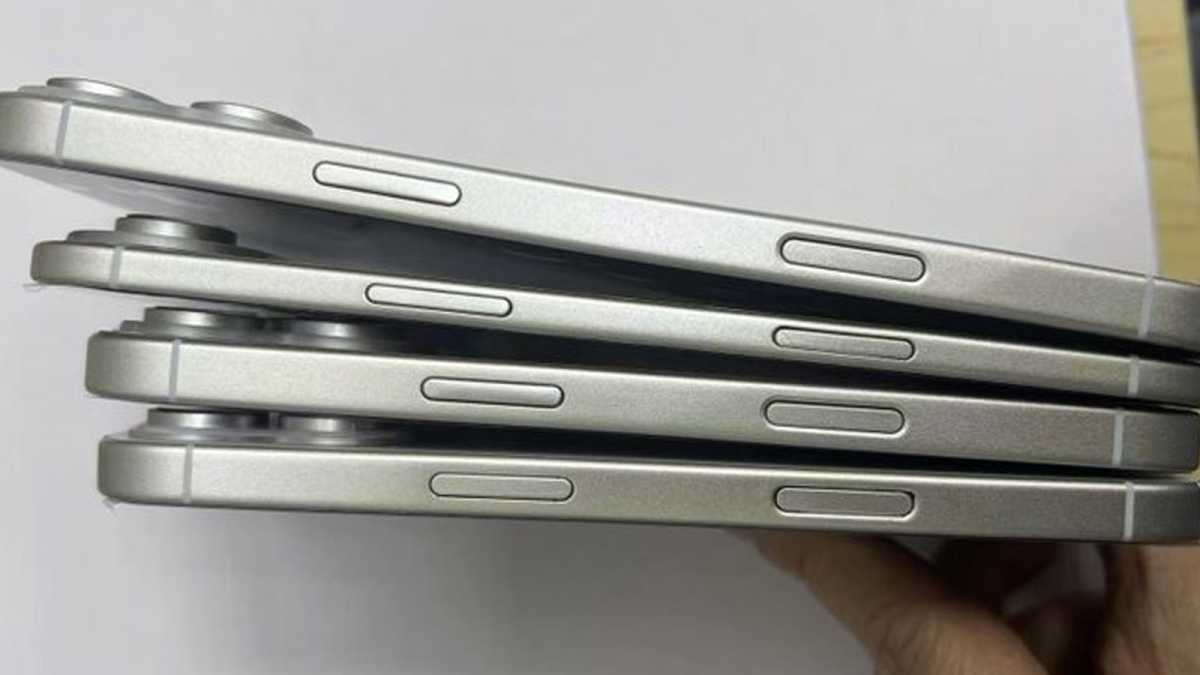
Sonny Dickson
Having seen dummies of all the models, we now know that iPhone 17 Air is larger than the 6.1-inch iPhone and iPhone Pro, but smaller than the 6.9-inch iPhone Pro Max.
However, while the iPhone 17 Air’s dimensions seems ground-breaking, the design may come with compromises. For instance, Kuo expected it to lack a physical SIM card slot, opting instead for eSIM technology – something that has now been confirmed by the leaks of dummy models – a move that may encounter resistance in markets like China, where eSIM-only phones are not yet widely adopted.
The device might also feature an Apple-designed modem, which could be smaller and more power-efficient than current Qualcomm chips but therefore lack mmWave support and deliver slower data speeds.
Whether this bold design shift will revitalise sales in a segment that struggled with the iPhone 16 Plus remains to be seen.
iPhone 17 Ultra
Will there be an “Ultra” model, as some rumours have suggested? 9to5mac speculates that the “Ultra” model could replace the Pro Max, but most opinions are in favour of a more traditional Pro Max model.
Design
Reliable leaker Sonny Dickson posted an image of dummy models of the iPhone 17 lineup on X, which gives the first concrete information on lens placement and the design of the camera modules.
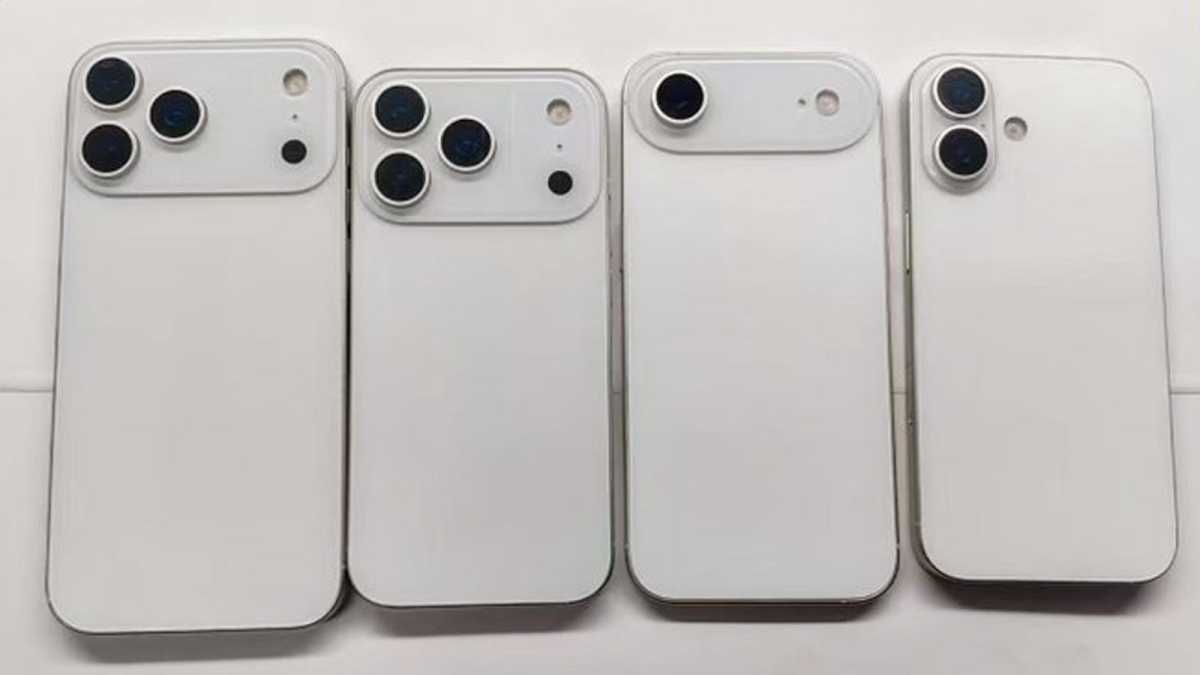
Sonny Dickson
Rumours also surround the Dynamic Island. According to Ming-Chi Kuo (via GSMArena), all models in the new line-up will have a Dynamic Island that’s “largely unchanged” in size from the iPhone 16.
But recent rumours surrounding the iPhone 17 Pro suggest some controversial design changes may also be on the cards.
Initially, The Information reported a return to aluminium frames instead of titanium.
However, a more recent report from a Chinese leaker on Weibo (via GSMArena) contradicted this, indicating Apple will retain titanium for the Pro models.
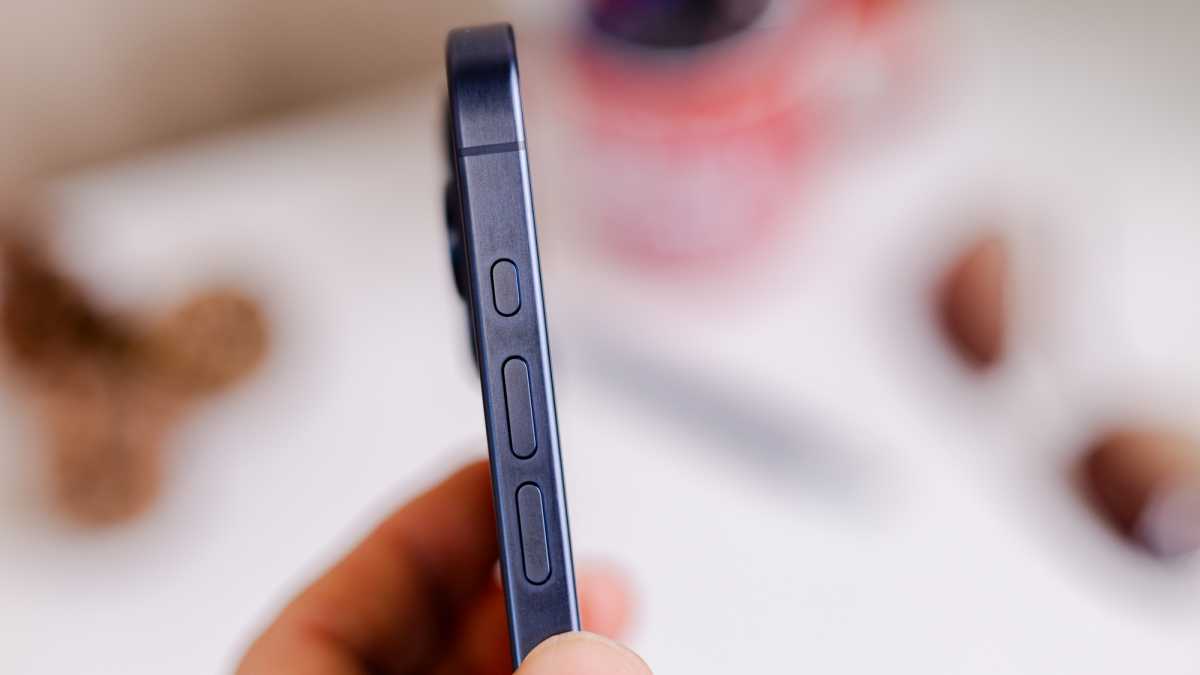 iPhone 15 Pro
Dominik Tomaszewski / Foundry
Elsewhere, Apple could introduce a new display size for the standard iPhone 17 model in 2025. The iPhone 17 could measure in at 6.3 inches, up from 6.1 inches, which would make it the same size as the iPhone 16 Pro.?
One notable rumour also suggests that Apple might introduce a new green colour option for the iPhone 17 Pro models.
According to the leaker Majin Bu, Apple is testing various colour codes, including #004349 (Teal Titanium), #4f00b7 (Green Titanium), and #003800 (Dark Green Titanium). While these colour choices are not finalised, there is a strong possibility that a Teal Titanium variant will make it to the final lineup.
The iPhone 17 Pro could mark a departure from Apple’s traditionally more subdued colour options for its Pro models, which currently include Black, White, Gold, and Gray for the iPhone 16 Pro. The introduction of green options would appeal to those who desire more vibrant choices in Apple’s premium lineup.
Display
According to The Elec, all models in the iPhone 17 lineup are expected to feature LTPO displays, with sizes varying between 6.27 inches and 6.86 inches. The always-on display, previously exclusive to Pro models, is also rumoured to become standard across all versions.?
A Chinese leaker, Ice Universe, claims that the non-Pro models of the iPhone 17 will feature an LTPO display for the first time, boasting a 120Hz variable refresh rate, similar to many recent Android flagships.? This could indeed pave the way for always-on display support, although Apple may still reserve this feature for the Pro models.
Digital Chat Station also suggest that the entire iPhone 17 lineup will feature ProMotion displays, Apple’s branded term for high-refresh-rate technology.
It remains uncertain whether the standard iPhone 17 models will match the Pro’s 120Hz refresh rate or settle for a slightly lower 90Hz. Either way, this would mark a notable improvement from the 60Hz screens found in the current non-Pro models, though it comes years after the competition.
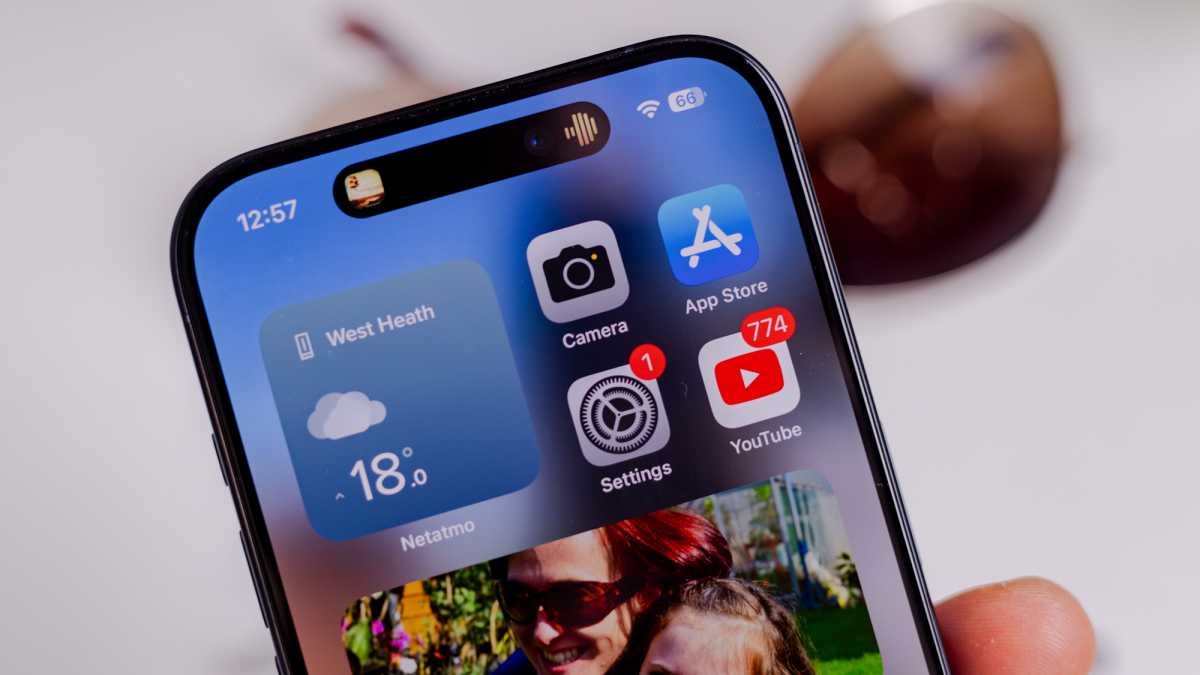 iPhone 15 Pro
Dominik Tomaszewski / Foundry
The iPhone 17 Air is rumoured (via DigiTimes) to feature a new, ultra-thin OLED display, which could make the device significantly thinner. This is made possible by Novatek’s TDDI (Touch and Display Driver Integration) OLED panel, which integrates the touch sensor and display driver into one layer.
While DigiTimes suggests Apple might adopt this technology for the iPhone 17 Air, it’s possible the company could first test it on other devices, like the Apple Watch or iPads, before introducing it to the iPhone.
Apple is also said to be working with Corning on a new anti-glare and scratch-resistant glass for the iPhone 17 lineup. That rumour comes from the account Instant Digital on Weibo.
Elsewhere, The Elec reports that the “zero-bezel” iPhone might not come until at least 2027.
All models of the iPhone 17 will likely be powered by Apple’s A19 chip, although only the Pro and Pro Max variants are expected to get the more powerful A19 Pro.
Previously, Ice Universe said that the Pro and (alleged)? Air models might feature the A19 Pro variant. However, Jeff Pu and Android Headlines both now report (via MacRumors) that the Air model will feature the standard A19 chip, produced using TSMC’s advanced 3nm process, offering high efficiency and performance gains.
Initially, as per a report from a Chinese site CTEE, Apple was planning to introduce 2nm chips for its iPhone 17 lineup in 2025, with these advanced chips expected to be featured exclusively in the iPhone 17 Pro and iPhone 17 Pro Max models.? However, production challenges at Taiwanese company TSMC mean that the 2nm chip is much more likely to be featured in the iPhone 18 lineup in 2026.?
 iPhone 15 Pro
Dominik Tomaszewski / Foundry
A? rumour from GSMArena suggested that all iPhone 17 models would come with 12GB of RAM, but analyst Ming-Chi Kuo clarified that only the iPhone 17 Pro Max will feature 12GB, while the iPhone 17, iPhone 17 Plus/iPhone 17 Air/Slim, iPhone 17 Pro, and the upcoming iPhone SE will stick with 8GB of RAM.?
Despite Apple’s efforts to develop its own 5G modem, the iPhone 17 series will likely still rely on Qualcomm for cellular connectivity. Wi-Fi 7 support is also anticipated.
Elsewhere, a new report from China (via GSMArena) suggests Apple could adopt vapour chamber cooling across all models in the lineup.
Vapour chambers are advanced cooling systems that use a small amount of liquid, typically de-ionised water, to dissipate heat. The heat from the chipset causes the liquid to evaporate, and the vapour spreads across the chamber to cool the device efficiently.
This new report challenges earlier speculation from Apple analyst Ming-Chi Kuo, who predicted that only the iPhone 17 Pro Max would receive a VC cooling system.
Cameras
On the camera front, the iPhone 17 Air is expected (via MacRumors) to have a single 48Mp rear camera, something borne out in images of the dummy models.
In January, Ming-chi Kuo suggested a significant upgrade is expected to the front-facing camera, with all models featuring a 24Mp sensor, compared to the current 12Mp selfie camera.?
In more recent research (via MacRumors), analyst Jeff Pu has supported the speculation from Kuo. Pu’s note for investment bank Haitong also included a chart indicating a 24Mp front-facing camera with a 6P lens for the series.?
The consistency in reports suggests a high likelihood of the 24Mp selfie camera feature.?
 iPhone 15 Pro
Dominik Tomaszewski / Foundry
In another Medium post, Kuo said that the iPhone 17 Pro Max is expected to feature a 48Mp wide camera, a 48Mp ultrawide camera and a 48Mp tetraprism telephoto camera, which will make it the first iPhone to feature three 48Mp cameras.?
Ice Universe also claims that the Pro versions of the iPhone 17 will include three 48Mp cameras covering wide, telephoto and ultrawide angles.
According to another Chinese leaker, Digital Chat Station, the iPhone 17 Pro and iPhone 17 Pro Max are expected to share all four of their cameras, including a 24Mp upgraded selfie camera. The rear cameras will feature a 48Mp main sensor (1/1.3-inch type), a 48Mp ultrawide lens, and a 48Mp periscope telephoto lens with 5x optical zoom.
Compared to the iPhone 16 Pro and Pro Max, the main camera sensor will be slightly smaller, while the periscope telephoto lens will see an increase in resolution. While these changes suggest only minimal camera improvements, Apple is likely to emphasise even minor differences during its anticipated September launch event.
The leak also indicates that current prototypes feature a horizontal camera layout on the rear, as previously rumoured.
Battery & Charging
According to leaker Majin Bu, Apple is set to introduce an innovative, electrically-induced battery removal technology across the entire iPhone 17 lineup, including the iPhone 17, iPhone 17 Air, iPhone 17 Pro, and iPhone 17 Pro Max.
This technology reportedly builds on the adhesive mechanism seen in the iPhone 16 and iPhone 16 Plus, which allowed users to detach the battery easily by applying a low-voltage electrical current.
The adhesive softens when connected to a 9V battery, USB-C charger, or other power sources, making battery maintenance and replacement more user-friendly.
Majin Bu also shared images hinting at adhesive variants for different iPhone 17 models. However, his track record on Apple leaks has been mixed, so while the expansion seems logical, it remains to be confirmed by other sources.
Software
The iPhone 17 series will launch with iOS 19, packed with new features and improvements.
Apple Intelligence will play an increasingly important role, requiring more RAM to support its advanced functionalities.
The iPhone 17 Air, expected to be equipped with 8GB of RAM, should be well-positioned to handle these new software demands, offering users a fluid and responsive experience.
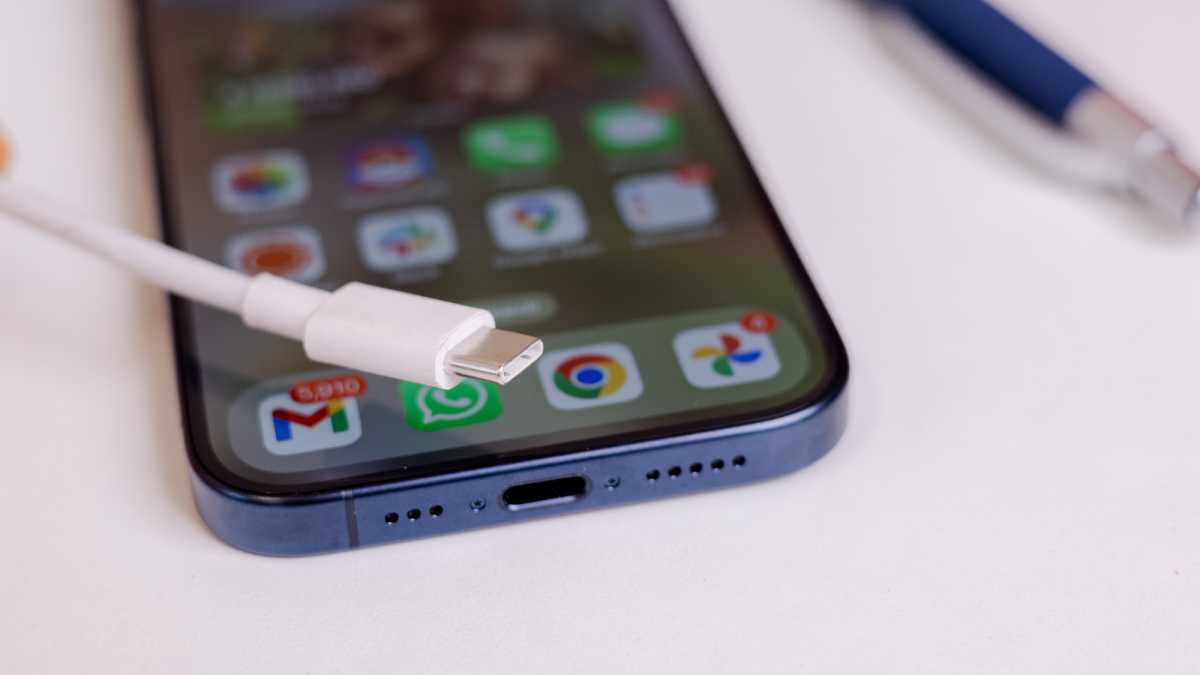 iPhone 15 Pro
Dominik Tomaszewski / Foundry
That’s all we know at this point about the iPhone 17 series. While we wait for more news, check out what the iPhone 16 series has to offer and where to buy it.


 Topic: iPhone 17 series news: Air is ultra-thin with a divisive camera bar design (Read 298 times)
 Similar topics (5)

 May 03, 2025, 04:56:38 PM